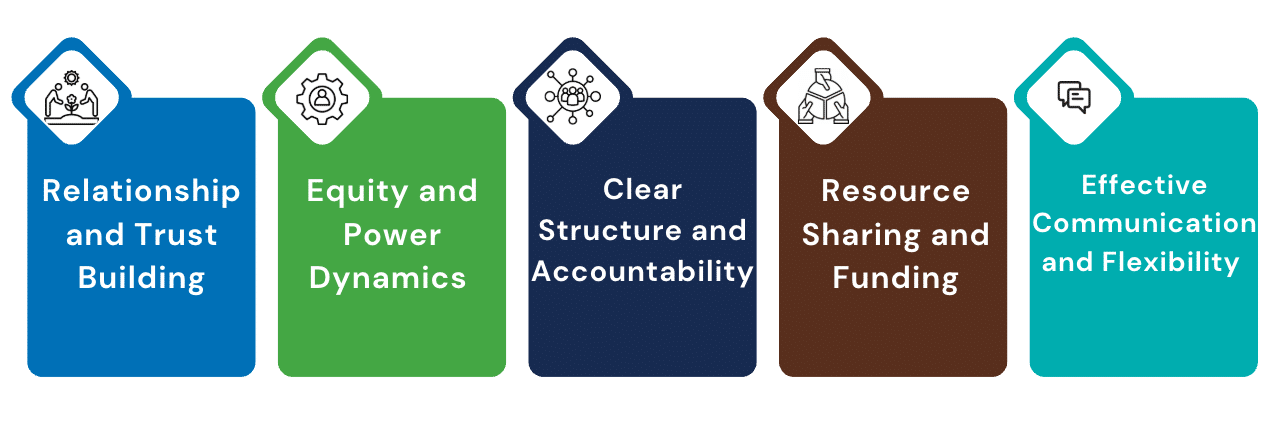
Relationship and Trust Building
- All parties confirm shared values and vision
- Practice and honor bi-directional transparency
- Long-term/ lots of time investment made
- Foster trust by recognizing past harms (acknowledge history) and rebuild where needed
- Emphasize humility, humanity, and active listening
- Lasts beyond staff turnover and/or funding changes
Equity and Power Dynamics
- Address and disrupt existing power dynamics and prioritize mutual decision-making over feedback-only models
- Apply principles of power-sharing and power-shifting to ensure all voices are respected; humility is essential, e.g., cultural humility
- Practice collaborative leadership
- Attend to Inclusivity
- Recognize that CBOs are not a proxy for community members but can serve as connectors
Clear Structure and Accountability
- Mutually define clear roles, responsibilities, goals, and expectations
- Establish intentional governance structures to support shared decision-making and power distribution
- Be action- and results-oriented
- Ensure mutual accountability, with follow-up actions demonstrating commitment to the partnership
Resource Sharing and Funding
- When possible, jointly secure dedicated resources and funding for sustained collaboration, not just short-term, transactional support
- Share resources and complementary assets across partners, valuing each organization’s strengths
- Provide supportive infrastructure, including staff, to support ongoing partnership activities
Effective Communication and Flexibility
- Maintain open, ongoing, bidirectional dialogue—not only in crises
- Use inclusive language and translation where needed for cross-sector collaboration
- Recognize each partner’s unique strengths, limitations, and evolving needs, with flexibility to adjust as the partnership progresses