Early Career Professionals How To Toolkit
How to Build your Network
What is networking?
Networking is the process of making connections and building relationships with other professionals in your field. It involves getting to know others, learning about their work, and sharing about yours. When people network they often exchange contact information. This helps people grow their professional networks, which can be a gateway to job opportunities and much more. Building relationships with peers in your field can expose you to new knowledge, resources, and connections that support your professional advancement.
How to build your network
There is no one right way to go about networking. Some people are more extroverted and quickly make connections. Others may be more introverted or shy and take more time developing connections. Your approach will depend on you.
Sometimes, people network with a specific goal in mind–to get a job or promote their research or project. Other times, people do not have a specific goal; rather, they aspire to build their network, knowing it may yield career benefits in the future. Building your professional network can help you achieve your career and professional goals.
Professional networks are comprised of both closer ties–like your coworkers or classmates–and weaker ties–like colleagues you meet at a professional meeting or conference. When we talk about networking, we often mean intentionally growing our network of weaker ties. At a basic level, this entails meeting new people and exchanging contact information or connecting on LinkedIn.
But networking also means maintaining established relationships. This calls for occasionally checking in with colleagues to find out how they are doing and what they are working on, and to share about your recent work too. Building your network requires growing new connections and maintaining existing ones.
Benefits of a Robust Professional Network
A robust professional network can help you:
- Gain mentorship and guidance – Connect with experienced professionals who can offer career advice and direction
- Learn new skills and best practices – Discover what’s new in public health
- Identify skill gaps – Understand what skills are in demand and where you need to grow
- Explore career pivots – Get insights into adjacent fields or roles
- Increase your visibility – Become top-of-mind when opportunities arise in your network
- Build confidence – Practice articulating your value and professional story
- Develop communication skills – Improve your ability to connect with diverse professionals
- Create partnership opportunities – Find collaborators for projects, ventures, or other opportunities
From Your Public Health Career: Building Blocks for a Purpose-Driven Career: Your Network
Building Genuine Relationships
Building Blocks for a Purpose-Driven Career: Your Network
From Your Public Health Career Workbook
Networking in public health is about building genuine professional relationships that can enrich your entire career journey.
In this building block, you will learn how to build and fortify your professional network, create a clear professional brand definition, and optimize your LinkedIn presence.
Networking opportunities
Join Professional Groups
Connecting with professional groups, associations, their members, and alumni networks is a great way to meet new people, broaden your network, and build relationships.
Building Genuine Relationships
Step 2: Join Professional Groups
From Your Public Health Career Workbook
In this step, you will learn how to connect with professional groups.
- Begin with 2 groups that most closely align with your interests
- Consider starting with a state organization and one national organization
- Connect or reconnect with your alumni networks
- Attend webinars and/or events for non-members to “test drive” the organization (many are free to attend!)
Types of Networking Events
Professional Meetings and Conferences
Professional meetings and conferences are a great way to build and maintain your network while expanding your expertise and skill set. They generally bring together scholars and/or professionals for the purpose of sharing advancements in the field and exchanging ideas. Such events offer myriad opportunities to connect with fellow attendees, from formal networking sessions to informal conversations while waiting in line for coffee.

10 Tips for Effective Networking

Networking 101: How to Survive a Networking Event

3 Tips for Attending Networking Events with Confidence
Career Fairs
Career fairs are a great way to learn about career opportunities and connect with potential employers. Universities and colleges, job placement centers, professional and industry associations, and other entities occasionally offer career fairs that bring together multiple employers for purposes of employee recruitment. The fair-like setting offers attendees a forum to connect directly with recruiters and learn about job openings. Job fairs can help attendees make valuable contacts and advance their job search.

How to Make the Most of a Career Fair

Career Fair 101: How to Prepare for an In-Person Fair

Tips for Career Fair Success
Informational Interviews
Informational interviews are a valuable tool to learn more about a specific field, industry, or institution, and establish meaningful connections. At a basic level, informational interviews are meetings or conversations in which individuals seeking information engage with a knowledgeable professional with experience. Unlike traditional job interviews, the goal of informational interviews is to gather insights, advice, and information–not secure a job offer. Informational interviews offer a low-stakes way to deepen one’s understanding of a field, a company’s culture, or a type of job in order to make informed career moves. They can help you build relationships before you need them, discover opportunities you didn’t know existed, and get advice from people who’ve succeeded in your areas of interest.
Building Genuine Relationships
Step 1: Conduct Informational Interviews
From Your Public Health Career Workbook
In this step, you will learn how to conduct an informational interview by walking you through the following components.
-
- Request the Interview
- Schedule the Interview
- Prepare for the Interview
- Conduct the Interview
- Follow-Up after the Interview

Informational Interviewing

Informational Interviewing is Key to Your Job Search

Sample Emails Requesting an Informational Interview
Virtual Events
Virtual events, such as virtual career fairs and networking events, offer access to diverse opportunities and the ability to make connections with people anywhere! Social platforms like LinkedIn and Handshake regularly offer virtual resources and events that can help individuals expand their professional networks and stay connected with trends and opportunities in their field.
Networking considerations for virtual events
-
- Use chat features to ask questions and engage with content
- Participate in breakout rooms
- Turn your camera on if you can
- Send connection requests to speakers and attendees on LinkedIn immediately after the event

Virtual Fair Digital Checklist

What is a Virtual Career Fair?

Virtual Career Fairs Tips
Get Started Guide
- Refresh your LinkedIn with new information and photos
- Update your resume with new information
- Get business cards to hand out to new acquaintances
- Develop a pitch, and practice introducing yourself
- Research your event and the people you may meet
- Jot down notes to help you remember conversations
- Add LinkedIn connections in real-time
- Send an email or text in real-time
- Identify a professional for a potential informational interview
- Follow up with people you met
- Request an information interview
- Stay in touch

Five Tips for Making Meaningful Connections at Virtual Networking Events

Five-Step Guide to Networking
Professional Networking in Public Health
10 Reasons Why Networking Is Essential for Your Career
Networking and Social Media
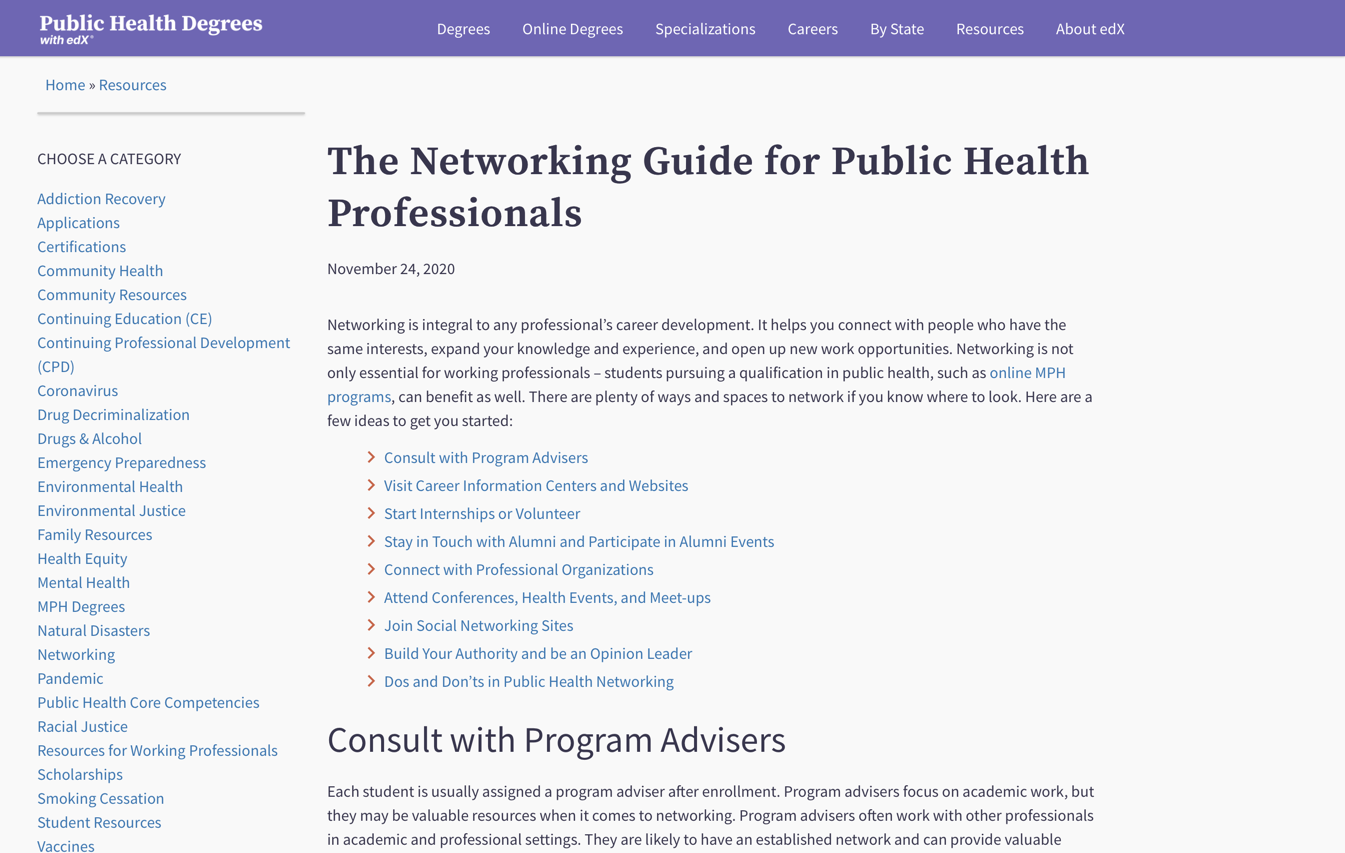
The Networking Guide for Public Health Professionals
The latest public health &
equity content
Straight to your inbox