Build and Bridge Workbook
POWER AND POWER BUILDING
Fostering successful partnerships through shared power and accountability.
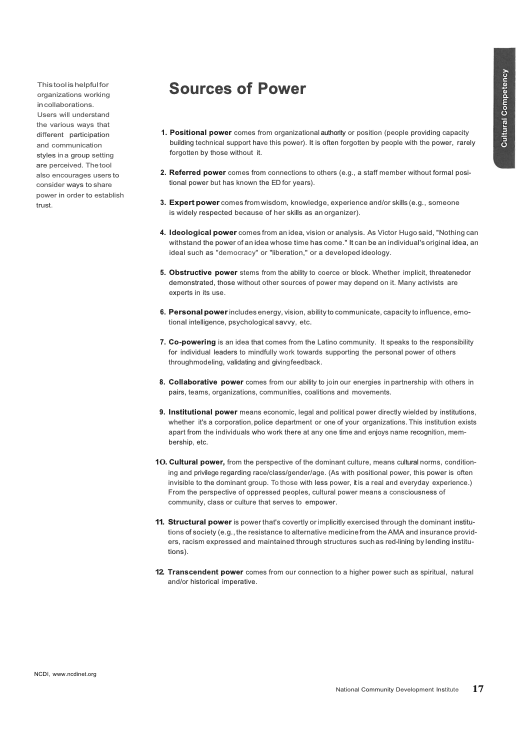
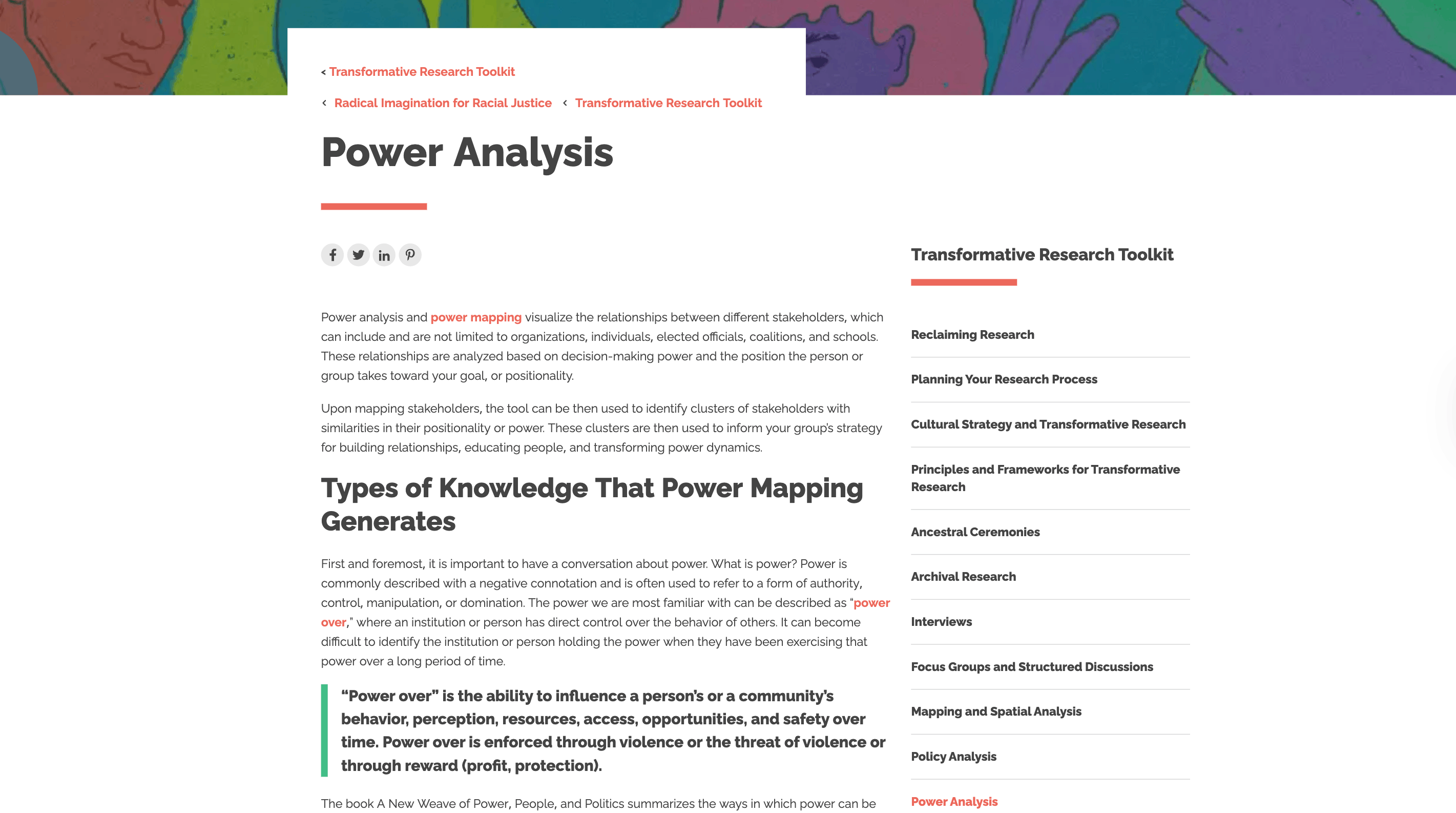
Power shapes how partnerships work—from who participates and whose knowledge is valued to how decisions and resources are shared. There are different forms of power, including financial, institutional, governmental, and relational power. Unpacking power dynamics can help partners work together more intentionally and consider how power is shared and built with communities.
Power differences can also reflect historical context, institutional practices, and past harms. Examining these dynamics is not about assigning blame, but about creating space for reflection and accountability and showing up better in partnership.
Building shared power is essential to fostering successful partnerships.
Use the key characteristics, reflection questions, and resources below to examine power dynamics and differentials in your partnership and explore opportunities to share, shift, or build power.
Key Characteristics of Successful Partnerships
The Key Characteristics of Successful Partnerships were developed to share what we know helps public health and community partnerships succeed. Guided by these characteristics, the Strengthening Public Health Partnerships Workbook helps teams learn, reflect, and take action to strengthen their partnerships. Explore the characteristics below and learn more.
Hover over the graphic to learn more.
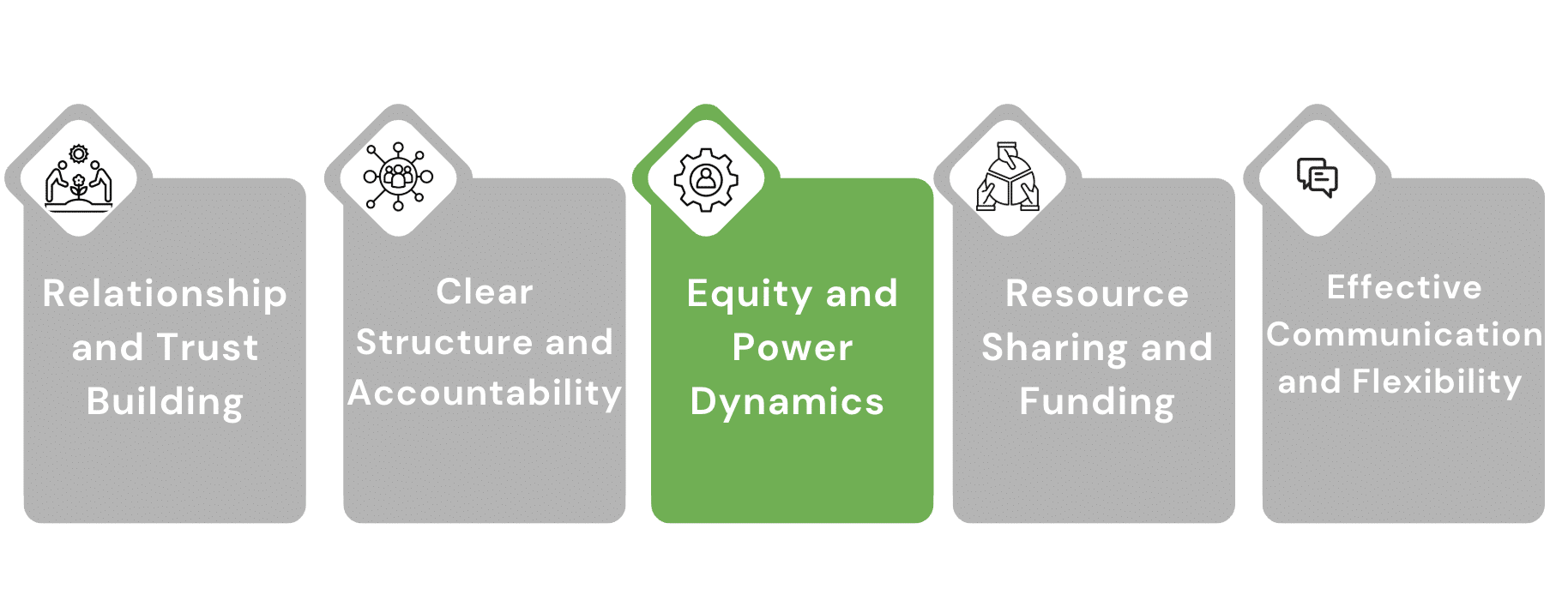
Equity and Power Dynamics
- Address and disrupt existing power dynamics and prioritize mutual decision-making over feedback-only models
- Apply principles of power-sharing and power-shifting to ensure all voices are respected; humility is essential, e.g., cultural humility
- Practice collaborative leadership
- Attend to Inclusivity
- Recognize that CBOs are not a proxy for community members but can serve as connectors
Reflection Questions
1.
In what ways has power shown up in your relationships?
2.
What harms still need to be addressed, if any? In what ways have you addressed these harms or how do you plan to?
3.
How does your partnership approach the residents of your community in terms of power?
4.
Are the activities of your partnership driven by the people in the community most impacted by health inequity?
4a.
Are community members being asked to support your activities and adhere to government
expectations? Are you seeking out ways you can support community-led activities on their terms?
5.
What are the barriers your partnership experiences in addressing power distribution?
6.
What strategies can you use to address power distribution within your partnership and with the community you are in?
7.
How do you plan to address the harms you discussed in this section?