Build and Bridge Workbook
COMMUNICATIONS AND ADMINSTRATION
Fostering successful partnerships through effective communication.
Strong partnerships benefit from clear and inclusive ways of communicating and working together. Everyday practices—how information is shared, meetings are organized, decisions are communicated, and responsibilities are divided—can shape important aspects of partnerships, like who participates and how they collaborate.
Many of these practices connect to power, trust, and accountability. By evolving everyday structures and processes, like communication methods and workflows, partners can advance the characteristics of successful partnerships.
Open communication and understanding are vital to fostering successful partnerships.
Use the key characteristics, reflection questions, and resources below to explore what your partnership needs for long-term success and how partners can sustain the work together.
Key Characteristics of Successful Partnerships
The Key Characteristics of Successful Partnerships were developed to share what we know helps public health and community partnerships succeed. Guided by these characteristics, the Strengthening Public Health Partnerships Workbook helps teams learn, reflect, and take action to strengthen their partnerships. Explore the characteristics below and learn more.
Hover over the graphic to learn more.
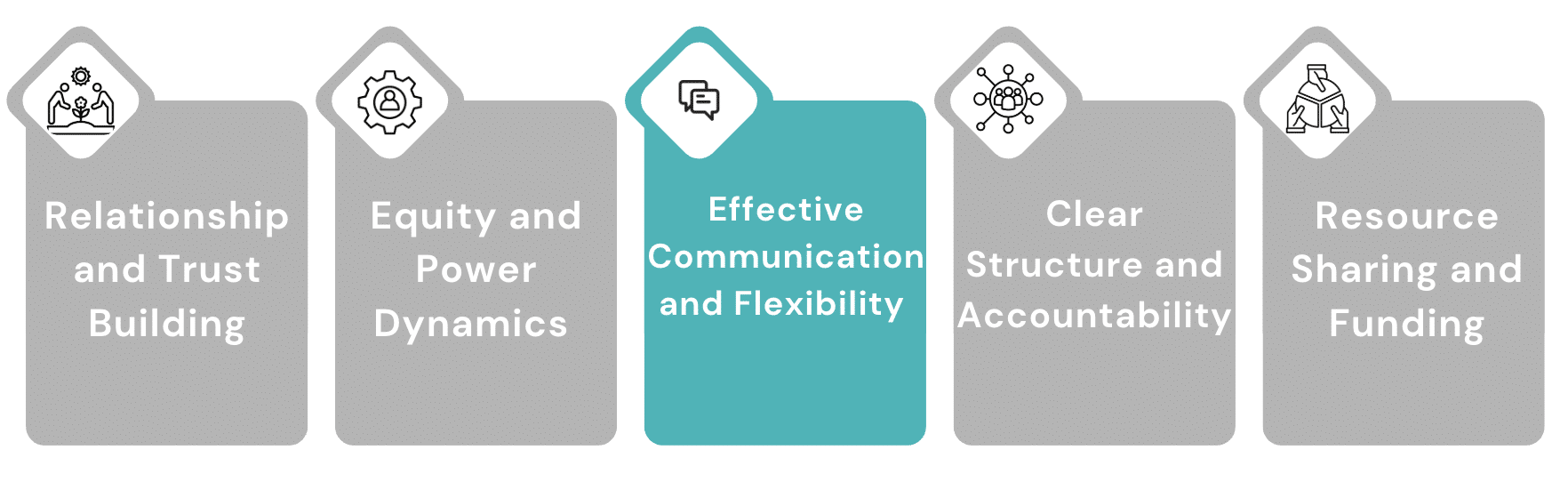
Effective Communication and Flexibility
- Maintain open, ongoing, bidirectional dialogue—not only in crises
- Use inclusive language and translation where needed for cross-sector collaboration
- Recognize each partner’s unique strengths, limitations, and evolving needs, with flexibility to adjust as the partnership progresses
Reflection Questions
1.
Are there words, phrases or jargon that should be avoided or explained for mutual understanding?
2.
Are there communications methods that work well, or don’t work? (email, Slack, texting, Teams, calls, etc.)
3.
What boundaries around availability do each of the partners have? (For example, are there particular times when partners are available or unavailable?)
4.
How do the individuals involved in the partnership like to receive feedback?
5.
What does belonging look like in your partnership? How can you foster belonging?
6.
What administrative strengths does each partner organization bring to the table? How can those be leveraged towards shared processes?
How we are moving forward
1.
How will you communicate and provide administrative support to your partnership?
2.
What will each member of the partnership take the lead on?
3.
What role do community residents play in the process and workflow?
4.
How will you know if you are successfully implementing your process and structure?
5.
How can we infuse this partnership into existing work? (Community Health Assessment (CHA), Community health improvement plan (CHIP) process, advisory boards, other projects, strategic planning, funding plans, etc.)